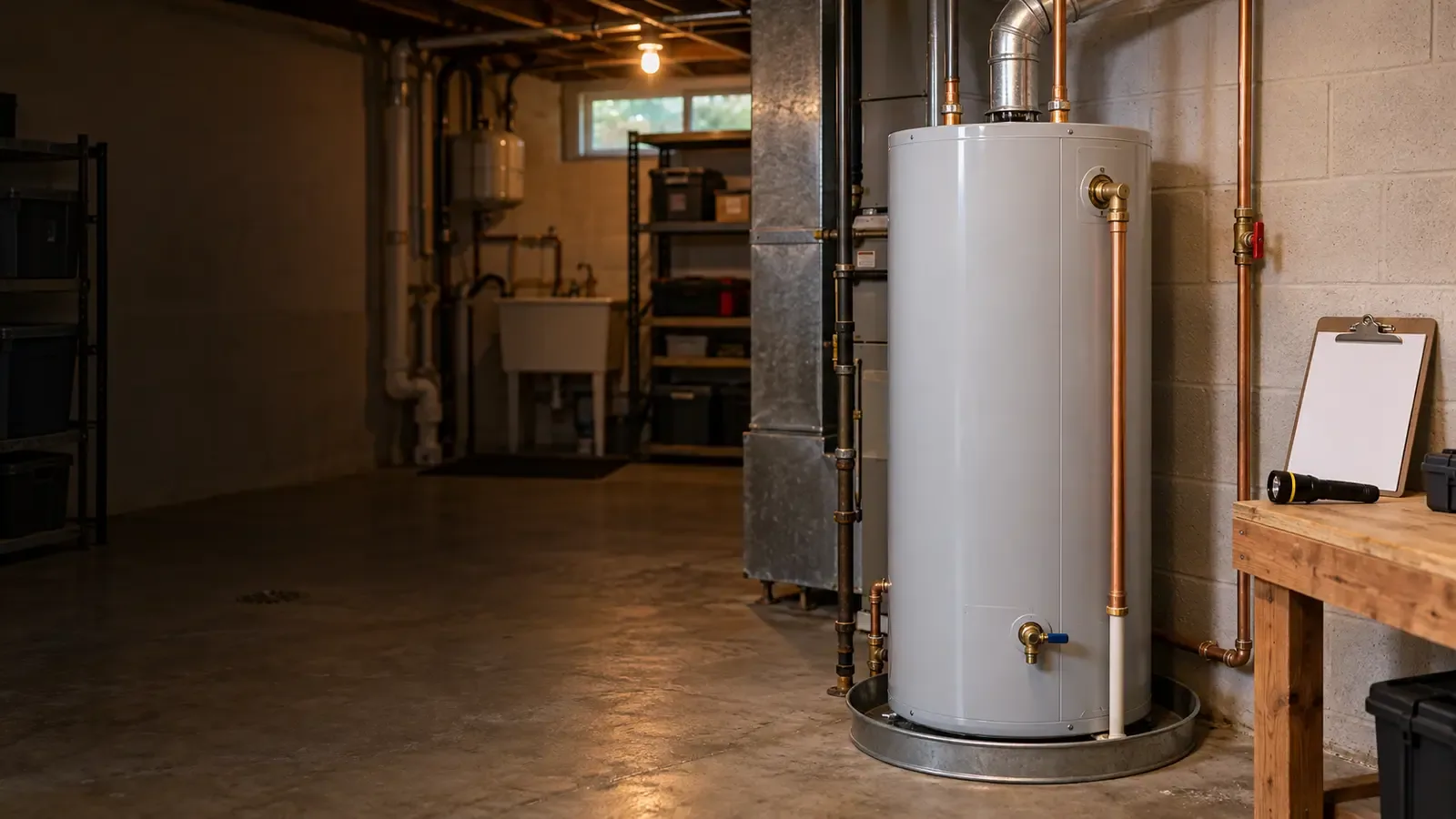
If your water heater fails, shut off its water supply and call a qualified plumber. If you smell gas, leave and call your gas utility from outside, or call 911 for an active leak.
In Pennsylvania, replacing a water heater falls under the Uniform Construction Code (UCC). You need a permit before planned work starts. An emergency replacement may happen first, but the permit application is due within three business days. The office you use depends on your Bucks County township or borough.
This guide explains the permit path. It does not rank plumbers or tell you how to disconnect gas, venting, or electrical parts.
Why your Bucks address changes the permit path
Bucks County has 54 municipalities. Each township or borough decides whether it administers the UCC itself. A local building or plumbing code office handles permits when it does. Otherwise, Pennsylvania’s Department of Labor & Industry (DLI) handles them.
That choice can change. Do not assume a permit route based on a neighbor’s project. Check the office for your address before work begins.
Falls Township shows how a local process can work. Its Code Enforcement and Zoning department lists Building & Plumbing Codes, an Electrical/Plumbing Form, and an online permit portal. Its published fee schedule lists $125 for each required code review. That is a Falls Township example, not a Bucks County-wide price.
Does a replacement need a permit?
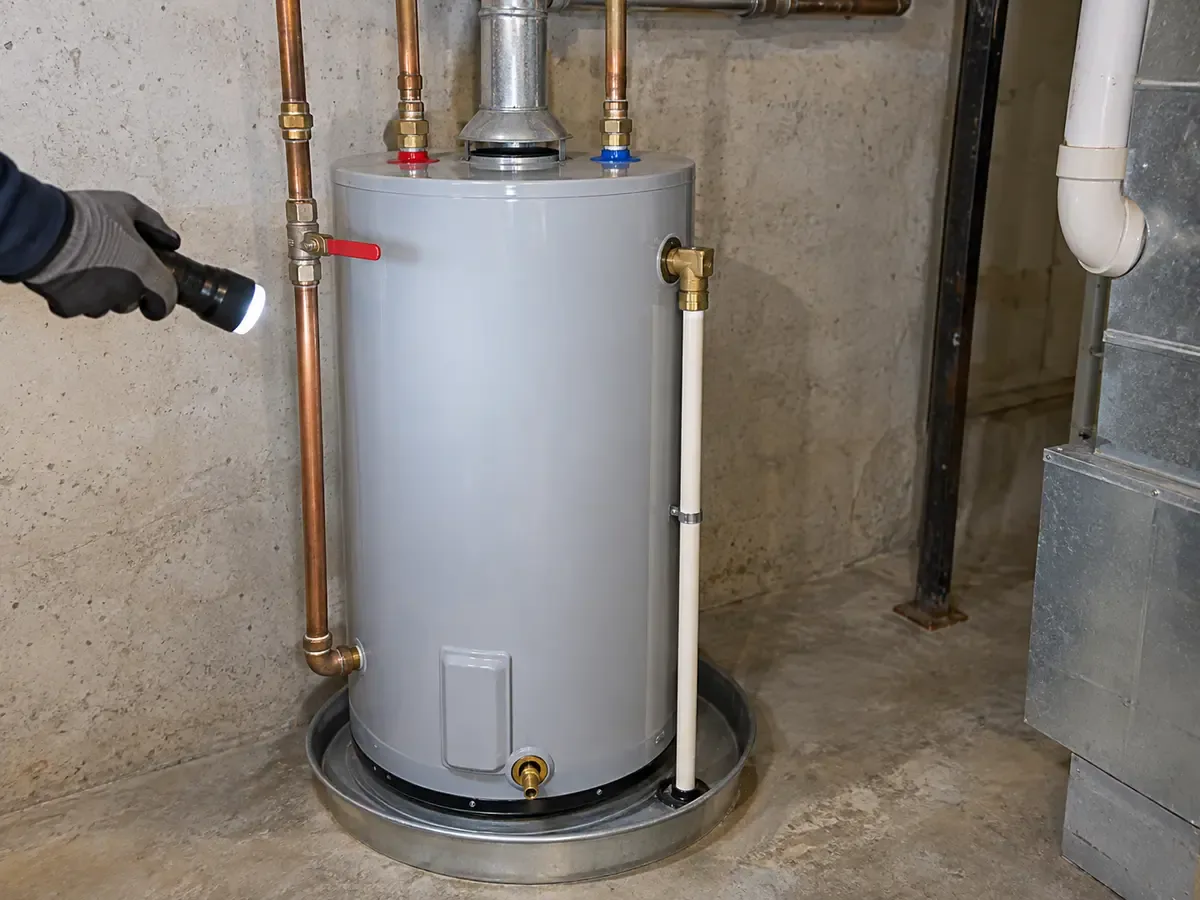
Yes, the UCC requires a permit for replacing a regulated electrical, gas, mechanical, or plumbing system. The rule appears in 34 Pa. Code § 403.62(a).
The same section lists limited permit exemptions. A water heater replacement is not on that list. The ordinary-repair exemption also excludes changes to water, gas, vent, mechanical, and similar systems. A normal water heater replacement therefore needs the applicable permit.
The permit is not the same as an inspection. Pennsylvania DLI says inspections are needed for several types of work, including electrical, gas, mechanical, and plumbing systems. Ask how the final inspection will be scheduled, and keep the closed permit record.
A plumber who says, “We never pull permits for swaps,” is not answering the rule shown by the state sources. Ask your building code official to confirm the requirement for your address.
What changes in an emergency?
Pennsylvania allows an emergency equipment replacement before the permit application is filed. The application must reach the building code official within three business days of the replacement.
This exception changes the filing timing. It does not remove the permit, fee, inspection, or code requirements. It also does not define every situation as an emergency. The building code official decides whether the exception applies.
For a Friday failure, ask the plumber which office will receive the application and when it will be filed. Get that answer in writing. Do not treat a weekend replacement as a permit-free job.
If water is leaking, shut off the heater’s water supply. Do not work on a gas connection, flue, electrical circuit, or relief valve yourself. Those parts need a qualified professional.
How to find the right office
Use this short check before you book the work:
- Name your municipality. Use your tax record, utility bill, or township address lookup.
- Check its code office. Search the township or borough website for building permits, code enforcement, or plumbing permits.
- Ask whether it administers the UCC. If it does, ask for the current water heater permit form, fee schedule, and inspection steps.
- If it does not, contact DLI. Ask how to file the UCC application for your address.
- Save the final record. Keep the permit, inspection sign-off, and contractor paperwork with your home records.
The exact fee may depend on the municipality, permit types, and work scope. A gas unit, electric unit, and heat-pump unit can involve different systems. Ask which permits apply before accepting a quote.
Can you pull the permit yourself?
That answer can vary by municipality. Some offices allow a homeowner to apply for owner-occupied work. Others may set applicant or contractor rules. Do not rely on a statewide assumption. Ask the building code official for the current applicant requirements.
Pennsylvania does not have one statewide plumber license. Ask the building code official whether your municipality requires a local plumber or contractor registration. Check that requirement before signing a contract.
A permit also does not prove that a company is good or that a price is fair. It shows that the required review and inspection process is being used. Compare written quotes that list the unit, permits, inspection work, and any disposal or electrical changes.
Questions to ask a plumber
Ask these questions before anyone removes the old unit:
- Which office is the building code official for my address? A useful answer names the township, borough, third-party agency, or DLI.
- Which permits apply to this replacement? A useful answer separates plumbing, mechanical, gas, and electrical work when needed.
- Will you file the permit before planned work starts? For an emergency, ask when the three-business-day application will be filed.
- Who schedules and attends the final inspection? A useful answer explains the office, timing, and records you will receive.
- What local registration or HIC registration should I verify? A useful answer points you to a current government record.
These questions help answer two common homeowner concerns. You can avoid guessing whether a permit is needed by checking the named office. You can reduce surprise charges by asking for the permit scope and fee before work starts.
Sources
Rules and fees can change. Recheck your municipality’s current page before scheduling work.
The Bucks Plumbers directory is an independent guide, not a plumbing contractor. We do not diagnose, install, quote, or endorse a listed business. For how we research directory content, see the Bucks Plumbers methodology page.
Sources
- 34 Pa. Code § 403.62, permit requirements and exemptions, Cornell Legal Information Institute republishing the Pennsylvania Code. Accessed October 7, 2026. Supports the permit trigger, emergency three-business-day filing rule, exemptions, and ordinary-repair limits.
- Apply for a Uniform Construction Code Building Permit, Pennsylvania Department of Labor & Industry. Accessed October 7, 2026. Supports the state permit and inspection summary and emergency filing guidance.
- Documents, Forms & Permits, Falls Township Code Enforcement & Zoning. Accessed October 7, 2026. Supports the local Building & Plumbing Codes office, Electrical/Plumbing Form, portal, and $125 per-code-review example.