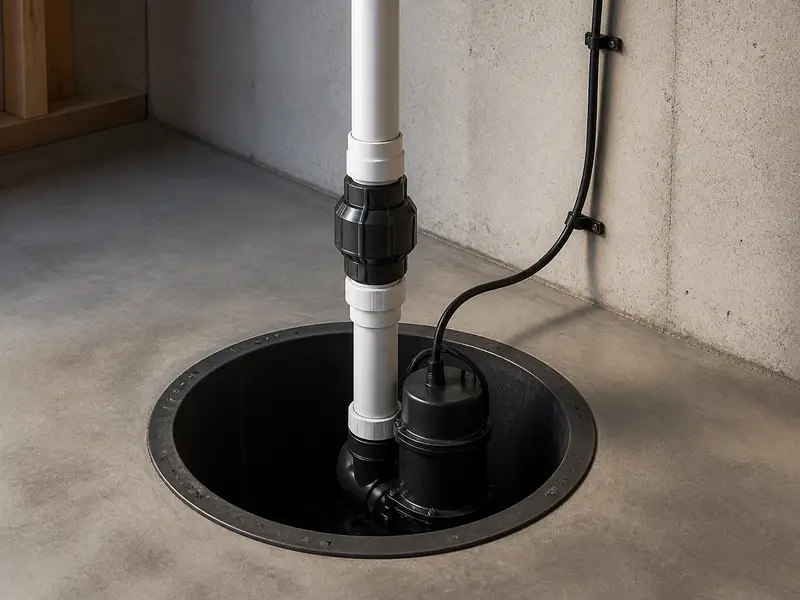
The system is more than the pump
A sump system collects water in a pit and moves it away from the foundation. Performance depends on the basin, inlet path, pump, float, check valve, discharge piping, power, and destination. Replacing the motor will not correct a blocked discharge or an undersized drainage system.
The best time to inspect the system is before sustained rain or snowmelt, not while water is already climbing.
Run a controlled test
Follow the manufacturer’s instructions. Where safe, add clean water to the pit until the float activates. Observe whether the pump starts, moves water, shuts off, and avoids rapid cycling. Listen for the check valve and inspect visible joints for leaks.
Stop if the receptacle, cord, or surrounding area is wet or damaged. A plumber can evaluate hydraulic and piping issues; an electrician may be needed for receptacle, circuit, or backup-power work.
Diagnose the failure mode
Pump does not start: the cause may be power, a stuck float, control failure, seized motor, or obstruction.
Pump runs but water rises: look for a blocked or frozen discharge, failed check valve, damaged impeller, excessive inflow, or inadequate capacity.
Pump cycles constantly: inflow may be high, the float range may be wrong, or discharged water may be returning toward the foundation.
Loud impact or vibration: the check valve, pipe support, debris, or worn pump may be involved.
Diagnosis should include the discharge route and outlet—not just the equipment in the pit.
Backup is a design choice
A battery backup can operate during an outage, but runtime depends on battery condition, pumping demand, and system design. A water-powered backup uses municipal water pressure and is not suitable or permitted everywhere. A generator can support broader loads but requires safe electrical and fuel planning.
Ask what event the backup is meant to cover: a short outage, primary-pump failure, or a long storm with heavy inflow. Add a high-water alarm that can alert occupants before the basement floods.
What belongs in a proposal
- pump type, capacity, and operating conditions;
- basin and float clearances;
- check valve and pipe support;
- discharge route and termination;
- electrical or backup-power responsibility;
- alarm and testing procedure; and
- permit, inspection, and cleanup scope.
Capacity claims should relate to the actual lift and pipe route. A headline gallons-per-hour number at zero lift may not describe performance in the home.
Maintenance and records
Keep the pit accessible and covered appropriately. Test before wet seasons, maintain backups according to manufacturer instructions, and record battery replacement dates. Inspect the exterior discharge for blockage, erosion, freezing, or water returning toward the foundation.
Do not discharge water into a sanitary sewer unless the serving authority expressly allows it. Stormwater and sump-discharge rules are local.
Flood and electrical safety
Never enter standing water that may contact energized equipment. Do not use an extension cord as permanent pump wiring. During active flooding, avoid removing covers or reaching into a pit. If water is rising faster than the system can handle, protect people first and call emergency or restoration help as appropriate.
Bucks County checks
Flood exposure, discharge rules, permit practices, and utilities vary by address. Confirm the municipality’s current requirements and the property’s drainage conditions. This directory does not certify flood protection or endorse a pump, installer, or backup design.
Sources
- FEMA — Maintain Your Sump Pump — https://www.fema.gov/node/356171
- Government of Canada — Sump Pumps — https://www.canada.ca/en/services/policing/emergencies/preparedness/get-prepared/hazards-emergencies/floods/flood-risk/prevent-flood-damage/sump-pumps.html
- Zoeller Pump Company — Strategic Sump Pump Placement — https://zoellerpumps.com/2025/01/08/prevent-basement-flooding-strategic-pump-placement
- Consumer Reports — Sump Pump Backup System Buying Guide — https://www.consumerreports.org/home-garden/sump-pumps/buying-guide
- Ready.gov — Floods — https://www.ready.gov/floods
- Leviton — GFCI Requirements for Appliances — https://captaincode2020.leviton.com/node/261
- Zoeller at Home — Why Sump Pump Check Valves Matter — https://zoellerathome.com/2023/09/29/importance-sump-pump-check-valves
- This Old House — How to Install a Sump Pump — https://www.thisoldhouse.com/basements/how-to-install-a-sump-pump
Related video
Simple Sump Pump Maintenance
A safety-first demonstration shows basic inspection, inlet, check-valve, and test-cycle concepts for an existing sump pump.
Video: Simple Sump Pump Maintenance — Central Insurance.
Context and limits: The publisher is an insurance company. Electrical, drainage, excavation, or replacement work belongs with qualified professionals.